
Share Fern Hermione Clark Bowen's obituary with others.
Invite friends and family to read the obituary and add memories.
Stay updated
We'll notify you when service details or new memories are added.
You're now following this obituary
We'll email you when there are updates.
Select your format and elements to print

IN LOVING MEMORY OF Fern Hermione Clark Bowen
Fern Hermione
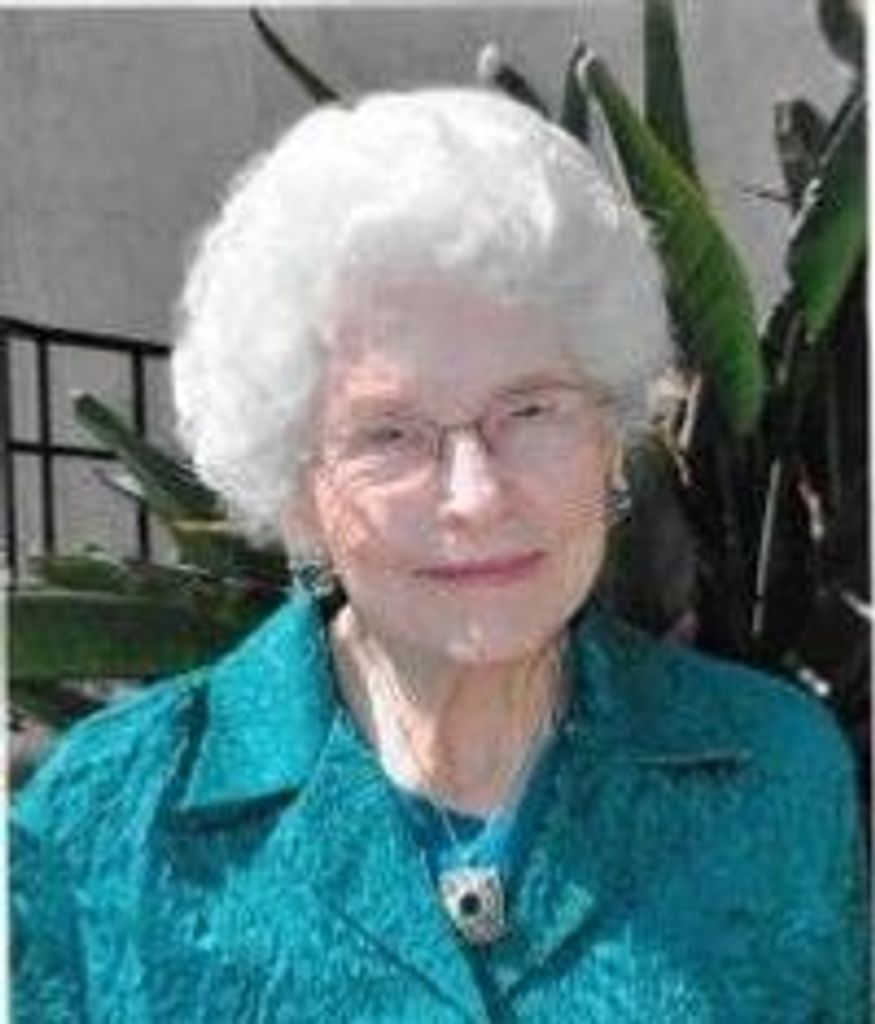
Clark Bowen
Sep 14, 1912 — Dec 27, 2015
Fern Hermione Clark Bowen's Obituary
Listen to Obituary
Born in a small log house in Lonoke, Arkansas, Fern Bowen witnessed astonishing transformations over her 103 years. Her parents, Hubert Clark and Ola Wingfield Clark, bought a farm in Gurdon, Arkansas, naming it Four Oaks in honor of the four massive oak trees in front. Fern recalls climbing into a loaded wooden wagon, clutching her little WWI soldier doll as her daddy prodded the family's two mules, heading for Four Oaks, their spacious new home. She was five, and her uncle was just returning from the war in 1918.
Over the years, her father grew cotton for the cash crop and corn for the animals, but plantings depended on the rainfall or water carried in buckets from the creeks. Fern and her younger sisters, Berniece and Eloise, helped their mother who worked in the summer vegetable garden, growing tomatoes, cabbages, onions, and yams. Ola spent the fall months canning and preserving the food to last them for the winter. Little brother, Buster, helped his daddy with the livestock. Springtime brought crabapple and violets; catfish fattened in the creek in summers; harvests brought abundance. All seemed as it should be.
One cold rainy day when Fern was 13, eight-year-old Buster had to round up the mules and drive them to another pasture. He came home chilled and shaking with fever. Without antibiotics, nothing could be done for the boy. The family was still in grief at his tragic death when Fern's mother became ill and was diagnosed with pernicious anemia. Ola died one week before her 40th birthday. Life would never be the same. Fern was fourteen years old when her aunt came to show her and Berniece how to do the family wash, involving many buckets of hand-drawn well water, a fire under a huge black outdoor cauldron, scrub boards and rough lye soap. Hubert remarried, bringing stepmother, Millie Norton Clark, and step-siblings Ruth and Bill to the family.
Her father honored Ola's wishes and made sure their daughters received at least a high school education, rare in those days. Women had only just received the right to vote. Fern went to live in town with her grandmother to attend Gurdon High School, but she graduated during the Great Depression and had to return to the farm. She pieced many a quilt with Millie, becoming ever more desperate to escape farm life.
In 1936, Fern's Grandpa Wingfield died and left enough money for two years of college at Henderson, a Methodist- affiliated college in Arkadelphia. She lived with Reverend and Mrs. Roy Fawcett, helping them while earning a license for teaching.
Her first classroom was in Carthage, Arkansas—a town of about 500 at the time—and she earned the magnificent salary of $45 a month. Two years later, she received a staggering $75 a month for teaching in tiny Delight, Arkansas. In 1939, Kermit Bowen and his brother, Newell, happened to be visiting relatives in Delight, and decided to attend the Methodist Church. Fern knew Newell from high school, and the young people double-dated several times, intensifying the sparks between Fern and Kermit. The brothers served in the Navy in San Diego, and as world war loomed, they had to return to California, leading to Kermit's courtship by mail. Kermit played the French horn in the Navy band and had served on the US Arizona and US Colorado.
After his discharge from active duty, Kermit wanted to send Fern a plane ticket to join him in San Diego where he'd found a job refinishing furniture. Hubert, her father, insisted that Kermit return to Arkansas if he wanted to marry his daughter. Kermit did so and promised to bring Fern back to Arkansas every year, remaining true to that promise throughout Hubert's lifetime.
In a ceremony performed by Brother Fawcett, Fern's mentor from her Henderson days, the couple married on September 3, 1940. At Four Oaks, they said farewell to the family and drove off with old shoes tied to their car. The couple spent the first night of their honeymoon in Paris—that's Paris, Texas—and settled in a small mid-town bungalow in San Diego.
Stunned at the bombing of Pearl Harbor, Kermit was especially horrified that his old ship, the Arizona, was destroyed. (During a vacation to Hawaii in 1989, the family would visit its sunken ruins where his navy buddies had perished.) During the war years, Kermit worked at Convair as did Fern, who soldered electrical wiring. Women squeezed into the confined spaces of the aircraft where many male workers could not.
As the war ended in 1945, Kermit and Fern contributed to the baby boom with the arrival of their daughter Margaret (later called Peggy). Fortunately, Kermit's mother, Ethel, helped care for Peggy, as Fern returned to work. Since the postwar toddlers were about to flood schools and require teachers, Fern received a provisional license, which allowed her to teach while studying summers and evenings, rounding out her college education. The first job opening at a small school near Jamul required her to teach grades one through eight in one room, yet Fern was among the forefront of modern women, managing motherhood, a full-time job, and college classes. In 1949, she began teaching in Lemon Grove.
Settling in La Mesa, Fern and Kermit found the First Methodist Church. Though he'd worked as a draftsman, Kermit was a musician at heart and played the violin with a small band. The group gave concerts and played at dances, but when Fern arranged for them to play at the church, the bass fiddle player turned up drunk. She was deeply embarrassed. Her reactions were also mixed when Kermit left Convair to start his own company, Bowen Enterprises, promoting his inventions—a musical instrument, an idea for a "flying saucer," and later, drafting machines.
Peggy finished college and married, and Fern and Kermit designed and built their dream home on Mt. Helix. Fern retired in 1975, completing a teaching career of 32 years, leaving her time for her grandsons, Chris and Michael Lang, born in 1974 and 1978 respectively. Fern became more involved in the church, enjoying her Sunday Morning Book Group, Spiritual Growth, Lydia Circle, and a movie review group. She also attended Retired Teachers meetings, a hobby group, and sang with "Generations," giving concerts and singing at retirement homes. Kermit died at 88 in 1999, and Peggy came to stay with her mom in 2002, the year great-grandson Clint Lang was born in Phoenix, followed by Kensey, Fern's great-granddaughter, two years later. Michael joined Fern's household in 2003 when a new wing was added.
Still active at her 103rd birthday, Fern was an elegant, energetic, beautiful, intelligent woman, living life to its fullest.
To send flowers with our preferred florist or plant a memorial tree, please visit our flower store.
Fern Hermione Clark Bowen's Guestbook
Visits: 1
This site is protected by reCAPTCHA and the
Google Privacy Policy and Terms of Service apply.
Service map data © OpenStreetMap contributors