
Share Dwight Verne Miller's obituary with others.
Invite friends and family to read the obituary and add memories.
Stay updated
We'll notify you when service details or new memories are added.
You're now following this obituary
We'll email you when there are updates.
Select your format and elements to print

IN LOVING MEMORY OF Dwight Verne Miller
Dwight Verne
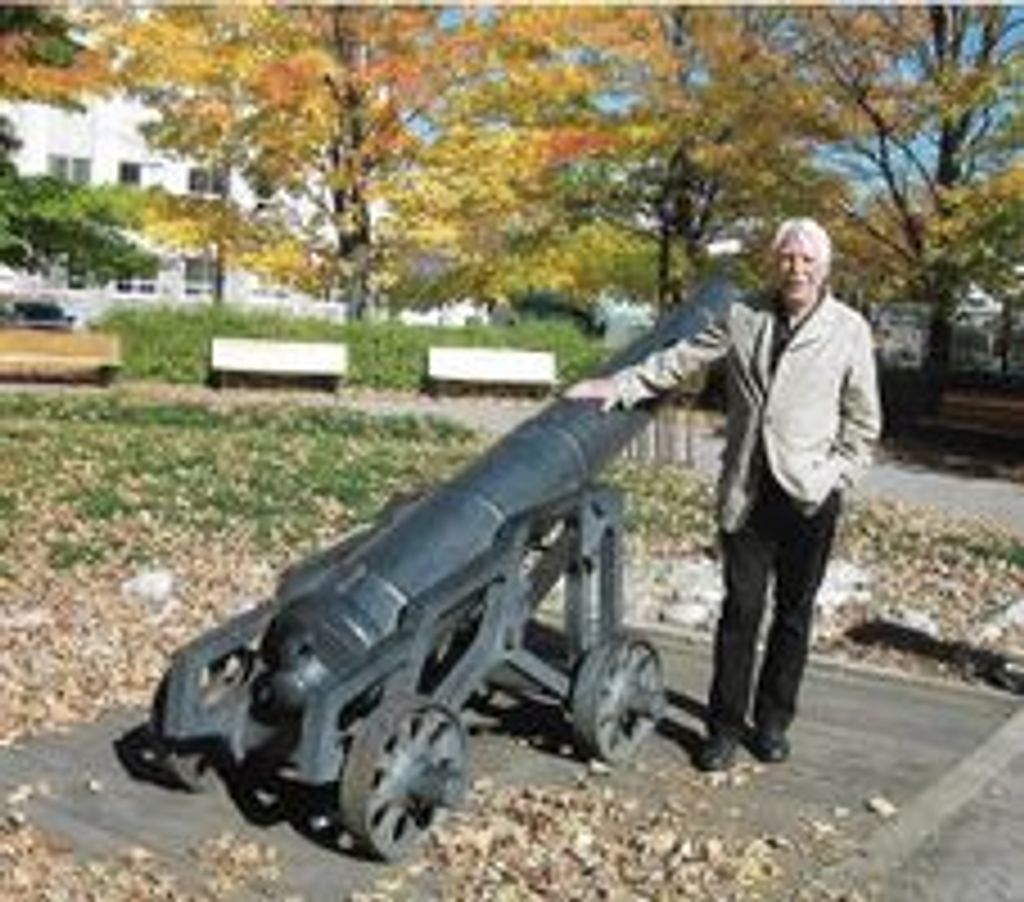
Miller
Jan 24, 1934 — Dec 5, 2016
Dwight Verne Miller's Obituary
Listen to Obituary
Dad was a natural-born storyteller—one of the best I've ever known. Whether his audience was family, friends, or a Sunday school class, he made them feel like they were right there with him when it happened, whether it was how, as a teenager, he and his friends managed to put a car on the roof of the school house, or how, in the navy, he and his shipmates polished the decks so well that the captain slipped on them and fell down. We held our breath in fear right along with him as the captain carefully got to his feet, looked at them and said, "Keep up the good work, men."
Dad, aka Dwight Verne Miller, was born in Lincoln Nebraska on January 24, 1934, to Vernie and Ethel Miller. His family parents and older brother, Don), moved to Ramona California when he was twelve. In 1952, he graduated from Ramona high school, where he played on the football and basketball teams. When I was little, he used to show me which finger he broke while playing basketball; then he would tell me how much he loved playing the game.
And he wasn't just good at football and basketball either. He was good at just about every sport he tried. Mom always told us that the first time he donned a pair of water skis, he skied so well she thought he'd been doing it all his life. He was the best at every sport he tried, from archery to bowling, if you can call bowling a sport. And Dad was the all too rare kind of person who did things because he enjoyed them, not because he had anything to prove. I guess that's why, when I used to work crossword puzzles with him as a teenager, he only filled in the blanks when I gave up, and he never, ever gloated over knowing all those crazy, obscure words.
After high school, he joined the navy and spent four years aboard the USS Hector during the Korean War. Judging from the endless funny stories he used to tell, that was one of the best times in his life. That's probably why his favorite TV show was MASH. Although he wasn't on the ground during that war, he could relate to the camaraderie among the soldiers, the love and the pain, the loneliness and the laughter; the hard times that bring a disparate bunch of people together and cause them to bond like a family.
When he finished his four years in the navy, Dad returned to Ramona and met his future wife and my future mom, Carol Bartell. They married in June of 1958 and moved to San Diego. Shortly after that, he started training at City College to be a butcher—three nights a week for two years. That was back when a butcher's job was to tackle the whole enormous animal, cutting it into slightly less enormous pieces that were then cut into the steaks and roasts you see at the grocery store. It was dirty and exhausting work, but Dad was good at it—he was good at just about everything he did.
Thankfully, Dad got a job with Lucky Supermarkets, so when his training was over, he didn't have to wrestle whole steers anymore. He worked there as a meat cutter, cutting the parts into steaks and roasts, for the next thirty-five years. He only missed a handful of days in all those years because of illness, most of them during one time when he was scratched by the spines of a fish and got blood poisoning. He was very sick from that, but, true to form, he recovered without complaint and went back to work.
One year after marrying my mom, his first daughter, Lauri, was born. They had a son, Rob, three years after that, and six years later, Mom got her lifelong wish and gave birth to twins: David and Deanne. Dad loved to be needed. For as long as I remember, he did whatever we asked—within reason. When I was very small, I would always ask at bedtime, "Dad, will you come tuck me in?" And he would always reply, "You go to bed and I'll be there in a minute." He would tuck the blankets in really tight, so I felt very safe and secure. Then I would ask, "Dad, will you stay in my room until I fall asleep?" And he would quietly get the newspaper and sit down to read. Never once did he leave until I was fast asleep, which was amazing because he usually had these requests in duplicate, since David wanted to be tucked in too, and we slept in separate rooms.
Dad loved to laugh and play. Once, while driving through the dairy to buy milk—yes, there used to be drive through dairies—all four of us kids decided to echo everything he said while he ordered. "I'll have three half gallons of milk, please," echoed through the car four times after he said it, as did everything else he said after that. Poor Dad was telling us to stop it and, at the same time, trying not to laugh as hard as we were.
Dad loved strawberry ice cream, and Pralines and Cream from Baskin-Robbins; he loved oatmeal raisin cookies, liver and onions, a good bowl of chili, and vanilla nut coffee. But really, he was content with whatever he had. And no matter what we gave him for Christmas or his birthday, whether it was another box of handkerchiefs or a new wallet, Dad would always tell us how great it was and how much he had been needing that very thing. He made every ordinary tie or bottle of English Leather seem like it was the most precious gift in the world.
He also loved to read. Two of his favorite authors were Louis L'Amour, with his tales of the old West, and Rex Stout, with his sarcastically funny detective, Archie Goodwin. He used to spend his lunch breaks sitting in his truck, as content as ever, with a couple sandwiches and a good book. Dad was a great narrator, too. I can't count how many books he read to me as a child, including the entire Black Stallion series.
He also loved slapstick humor, so Mel Brooks's movies were some of his favorites, like Spaceballs and Young Frankenstein. He really liked John Wayne, too, but 'any old cowboy movie would capture his attention. He was a kid at heart, though, and one of the movies at the top of his list was always Willy Wonka & the Chocolate Factory. We'll always remember with a smile how, one evening, we kids were all arguing over what to watch on TV, when Dad ended the argument,pounding his fist on the wooden coffee table to emphasize each word and demanding, "I wanna watch Willy Wonka!"
But I think Dad was happiest when he was working with wood. He loved carefully cutting out a pattern, fitting the pieces together and making a perfect finished product. He made everything from bookcases to picture frames—he even made a cradle for his first grandchild. His magnum opus, though, was building the entire kitchen in a mountain cabin he and Mom bought in Big Bear. He was very proud of his work when he finished, and rightfully so. It was professional, it was artistic, and it was beautiful.
Perhaps because his own father was raised on a farm, Dad loved growing things. He especially liked growing delicious tomatoes. But his pride and joy was a poinsettia plant he acquired shortly before he retired and tenderly nurtured from a tiny pup into a six foot tall, and at least that big around, bush that was literally covered with bright red flowers. For two months, he faithfully covered it with a tarp every evening at six o'clock and uncovered it a six each morning in order to give it the required twelve hours of darkness poinsettias need to produce their red blooms. That plant was so beautiful that it almost upstaged the Christmas tree for a couple of years.
In 1993, Dad retired from Lucky Supermarkets. Shortly after that, he started working as a Retired Senior Volunteer Police officer. He loved that job. He had always been fascinated by the police. When he was younger, he used to love going on ride-alongs with a police officer friend of his. His friend had a police dog, and Dad was fascinated by the dog's training and discipline. He liked to tell about one time when he watched the dog run through an agility course for exercise. As he watched, a rabbit hopped up to the edge of the track and stopped. Dad held his breath as the big German Shepherd came closer and closer, and finally ran right past the rabbit without even glancing at it. "It was amazing," he used to say, "I thought for sure I was going to see that rabbit get torn to pieces."
Eight years after retiring, in 2001, Dad had his own brush with death. He and Mom had been staying in a hotel right next to UCLA Medical Center because I was having surgery for a cancerous tumor in my sinuses that was threatening to attack my brain. I was sick with worry, since my surgery had been postponed for three weeks because of a national neurosurgeon conference. Little did I know that God was working out the timing so that, not just my life, but Dad's life too, would be saved.
Four days after my surgery, when I was stable and doing well, Mom and Dad were preparing to go home when Dad had a seizure and passed out in their hotel room. As he fell, he hit his face against the corner of the wall and began to bleed like crazy. Their hotel was right next door to the hospital, though, so the paramedics had him in the emergency room within ten minutes. They quickly diagnosed him with a massive pulmonary embolism. Doctors told our family to come to his bedside because there was a very good chance he wouldn't survive. Several days and blood transfusions later, they pronounced him stable. The doctors told us that, had he not been so close to the emergency room when his seizure happened, and had he not cut his face, which kept him from hemorrhaging internally, he wouldn't have lived. Evidently, God still needed him here, and we were all so very thankful for that. In the years that followed, Dad got to see his sixteen grandchildren grow up. He got to see me survive my cancer and get my Bachelor's degree. He got to meet his first and only great grandchild. And he got to celebrate more than a decade of holidays and birthdays with all of us. But only about six or seven of those years were totally healthy ones.
It was around 2007 or 2008 when Dad suffered his first minor stroke. It didn't do much to disable him—just a little less coordination in his left hand. Over the next several years, though, he had more minor strokes, each one taking a little more of his coordination and feeling until he couldn't do much with his left hand and needed a cane for balance. He faithfully went to physical therapy twice a week and worked out hard on the machines, stretching, and trying to improve his balance. He worked so hard–patient, persistent, optimistic Dad, joking and laughing with the other patients and therapists. And he got stronger and improved, too, but like little ants that ruin a picnic, the minor strokes kept coming until he needed a wheel chair and couldn't work out anymore.
His last three years were spent confined to a wheel chair and a nursing home. He lived for the moments when family came to see him. When we hugged him and told him we loved him, he cried and cried because he loved us too and missed us so much. Dad's strokes had also taken a toll on his larynx. As time passed, it became harder and harder for him to talk. It also became easier to choke on his food and drink. And, as often happens when people have damage to their larynx, some of his food or drink got into his lungs and Dad got pneumonia. He fought so hard to live, but the lack of oxygen proved too much for his immune system and the infection got the best of him.
Dad passed away on the morning of December 5, 2016, with his wife, four children, and several grandchildren surrounding his bed. If he could, I know he would tell us not to cry; I know he wouldn't want us to be sad and heart-broken. But it's hard not to cry when we miss the quietly strong and steady man who has been there for as long as we can remember. We will always draw strength from the memory of his courage, and courage from the memory of his strength.
Dwight Miller is survived by his wife, four children, sixteen grandchildren, one great granddaughter, and his brother, Donald.
A Church Service will be held on Tuesday, January 10, 2017, 2 PM at Gateway Church 1280 N. Johnson Ave, Ste 102, El Cajon CA 92020.
Dwight will be laid to rest privately at Miramar National Cemetery.
Donations may be made in Dwight's honor to:
http://www.challengecenter.org/services
To send flowers with our preferred florist or plant a memorial tree, please visit our flower store.
Dwight Verne Miller's Guestbook
Visits: 2
This site is protected by reCAPTCHA and the
Google Privacy Policy and Terms of Service apply.
Service map data © OpenStreetMap contributors