Share Donald Thomas Radmilovich's obituary with others.
Invite friends and family to read the obituary and add memories.
Stay updated
We'll notify you when service details or new memories are added.
You're now following this obituary
We'll email you when there are updates.
Select your format and elements to print
IN LOVING MEMORY OF Donald Thomas Radmilovich
Donald Thomas
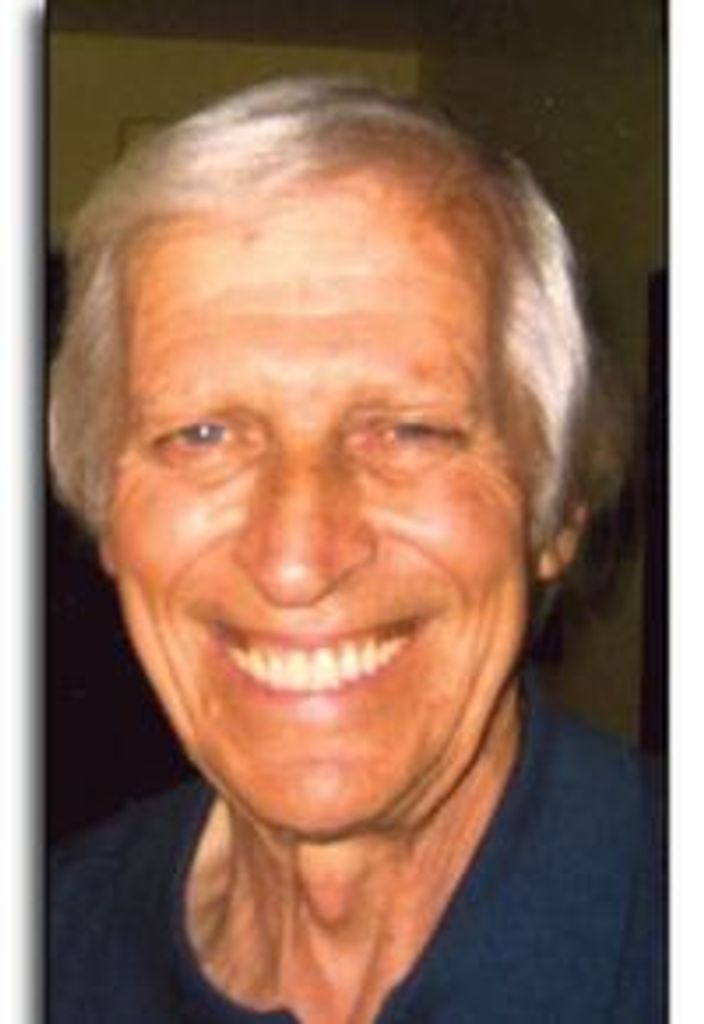
Radmilovich
Dec 1, 1934 — Feb 4, 2017
Donald Thomas Radmilovich's Obituary
Listen to Obituary
He was born in 1934, right in the middle of the Great Depression, joining an older brother, and two super parents. He grew up in the city where he was born, San Diego, and lived in the same house on 30th St. until he was almost 20 years old.
Rad had only fond memories of his childhood, because there were 17 kids within 3 years of age of one another on four adjacent city blocks. In addition, his grammar school was only 6 blocks from his house, so there were many more kids he became friends with close by, especially some good lookin' girls. If you've ever seen an "Our Gang" movie, then you can imagine what all these kids looked like, and the things they did.
They played hide and go seek, kick the can, football, baseball, and had skate and scooter races, cowboys and Indians, war, and a few games in-between. They all had fun, fun, fun. They also got in trouble, trouble, trouble on Halloween, because that was the one night of the year that was "payback time" for all the nasty old geezers who'd keep the ball when it went in their yards, and call the cops when they were playing games during summer nights in the streets. Particularly, it was fun to scoop up some dog poop, put it in a paper bag, place it on their front porch, light it on fire, ring the doorbell, and then watch them stomp out the fire. Oh boy, did they ever get mad!
They also had lots of homemade toys, because with World War II going on, everything was in short supply. With scrap lumber, used ball bearings, and some nails and rope, he and his friends would fashioned "coasters" which they'd sit on, and steer via the front axle with their feet and the rope. The races were held in the street, or if the streetcars were running during their busiest times, they'd use the sidewalk.
He also had roller skate races. However, the parents of all the kids would get real upset because with the skates attaching to regular shoes, they'd destroy their shoes because the soles would peel back. With the war going on people could not always buy shoes (nor many other things) so there were times cardboard, string, and rubber bands replaced the soles. When the skates broke, they'd salvage what they could, put the wheels on a board and make what today would be considered a skateboard. Or, by adding a vertical piece of scrap wood, with a horizontal piece at the top, kids manufactured a scooter, which today would be a "Razor".
Back to the streetcars for a moment….in those days, with a lot less traffic, you'd wait on the sidewalk for the next one. Then, as it approached your stop, you'd go into the street within a painted area called a "Safety Island." It would stop, the doors would open, and you'd board the streetcar. Well it seems some of the kids (not Rad of course) would soap the steel tracks so that when the conductor applied the brakes, the brakes would get soapy and shoot the streetcar right by the people in the safety zone and come to a stop a block away! Also, some of the kids (again, not Rad) would disconnect the streetcar from the overhead electric transmission lines, so when the conductor stepped on the pedal to go, nothing happened. He'd then have to get off the streetcar, go to the back, reconnect the line, and get back in his seat. In the meantime, one or two of the kids (not Rad) would get on the streetcar at the front and get a free ride. Why didn't another passenger turn them in? Well, if you dropped a small piece of scrap metal into the coin box, it would "clang" just like a token or a dime fare, so the other passengers thought they paid.
Another thing Rad liked to do was go to the beach, spear fish, and abalone dive at La Jolla Cove. After his dad had died, his mom would fry chicken, mash potatoes, and bake a pie or cake on Saturday night. On Sunday, after church, they'd get 10-12 kids on a streetcar, transfer to a later bus, and they'd haul all the food and equipment to the beach. One of Rad's favorite things to do was to catch eels, bring them back on shore, but "accidentally" drop one or two on a blanket full of pretty girls. What a way to introduce yourself!
Another thing Rad enjoyed was entering politics. Rad was an overwhelming choice for Eraser Monitor in the first grade. He was even re-elected. He thought: "Whoa! This is too easy!" Then, in the Second grade, Rad ran for Cloakroom Monitor. Guess what – another landslide. The Third grade added the title: "Ball Monitor". Rad was on a tear! But, after holding other offices, and becoming a Lieutenant on the Safety Patrol, Rad lost in his first try for Seventh Grade President at Roosevelt Junior High School. However, he learned from his loss, and won the second semester, and was class president in the 8th and 9th grades, and (is his ego getting bigger or what?) became Student Body President. Wow! Is this a great country or what?
One of Rad's bigger disappointments occurred when he flunked the Boy Scout Tenderfoot test. How, you ask, could anyone flunk such an elementary exam? Well, one of the parts required the baking of a potato by heating rocks, digging a hole in the ground, and cooking the potato. He thought all went well, but somewhere in Balboa Park there is a 67 year old potato in the ground because he couldn't locate it in a timely fashion, thus flunking the test. Rad never went back to Scouting, probably because he couldn't face his peers again.
Let's go back to a highlight for a moment. As Rad mentioned, World War II brought on shortages of everything. One thing that was needed was to collect old newspapers for various uses in the war effort. Rad and his brother, among many other odd jobs such as mowing lawns washing cars, windows, etc., would take their wagon out in the neighborhoods and go house-to-house collecting old newspapers. They'd stack the wagon as high as they could, one would pull and the other would hold the papers in place. They'd then bring them into the kitchen, spread them out, and then our mom would roll them up and tie a rope around them. Then Rad and his brother would put the rolls in their garage, and twice a month a Bekins van would come and empty out the filled-up garage. They bought War Bonds with the money they received, then, when the war ended, they bought a '38 Chevrolet in 1948 for $845.00 which was $265.00 more than it cost ten years earlier. The reason the price was so high was because even though the war ended two years earlier, cars were still in very short supply.
Rad was only 14 when they bought the car, but he qualified for a driver's license anyway, since his dad had died five years earlier, and his mom never chose to drive. In addition, another job Rad created was running errands in other people's cars such as grocery shopping, delivering stuff, etc. What fun for a 14 year old showoff!!!
Fast forward to today and Rad found myself in the 52nd year operating an insurance agency which has provided the money to keep many families and businesses going after tragedy strikes, as well as the funds assuring a dignified retirement income. Lots of satisfaction here…. Rad had a good life. He has some beautiful daughters and some nutty grandchildren. Rad had his parents to thank for his values, a brother he shared them with, and a son he transferred them to. He has the Lord to thank for pulling him through some tough times, including that damned potato. Rad had lots and lots of happy memories.
Rad's Soap Box Derby car in 1948 was a true 'Our Gang' effort as 6 or 8 kids were involved. It was not a kit car as they have now – it was built from scratch using scrap wood, worn out linoleum, masking tape, a stolen lawn chair, a 'borrowed' car battery and the only thing they didn't make were the wheels, which had to be Official. Rad wanted it to look like a midget auto racer at Balboa Stadium where Rad's brother and he attended on Wednesday nights, not a typical Derby car. The 'rebel' in him was showing up again at age 14.
They started out with a 2" x 12" board for the platform, cut and formed the wood axles, built plywood frame pieces like an airplane's, hand sawed and sanded them, then used the linoleum left over from re-doing the floor of his back porch to cover the framing. Screws, nails and masking tape put it all together. Rad went to an auto upholstery shop and explained what he was doing and offered to buy enough leatherette for the seat and backrest, but the owner gave him enough to do the job and the specially designed nails too.
The official wheels cost $20.00 and Rad's great aunt, who owned a restaurant downtown named the Grand Central Café, gave him the money after he promised her he'd put the name of her restaurant on the car for all to see. She liked that idea. They lived on 30th street, a streetcar line. When it became time to test the car, kids were on bikes at every intersection from Juniper to Beech St. where the line turned West and continued to 28th Street. Kids on bikes were at those intersections too. As Rad picked up speed about Fir St., a bump put the left wheels into the streetcar track. Rad tried the brakes, but there were none – they forgot them. Away Rad went and was probably doing 20 -25 MPH when he came to the 90 degree turn at Beech St., and it's a wonder Rad didn't roll the car or fall out. He didn't stop until Granada St.
Three things were now needed: New wheels, brakes, and more weight. More weight because the more the faster coasting downhill. The maximum allowed was 250 lbs., car and driver. Rad was probably a 90 pounder then. Being they designed the car like a racer, he hollowed out another smaller 2 x 12, melted a car battery with a blowtorch they "found' in a neighbor's car to get the lead, and wallah, they now had an authentic looking oil pan beneath the car that added about 25 lbs. It is a wonder that they didn't blow up the battery and kill or burn themselves. They simply didn't know better. My aunt understood his dilemma and bought another set of wheels.
The brakes were made from the frame of a recliner lawn chair they also 'borrowed' and held up by the spring from Rad's home's rear screen door, which prevented the door from hitting the house. Rad's mom came home from work, came outside to see how they were progressing, slammed the door against the house and yelled 'What the hell happened to the spring on the door?" Rad was in trouble, believe him. Yes, Rad had to buy the new one and install it.
Rad went to Herman the German's shoe shop and he gave Rad a couple of used rubber heels and they attached them to the brake frame. The first test resulted in the heels stopping, but not the car. Back to Herman, stronger attaching, and they worked the next time.
The end result of all this is Rad placed third on San Diego's Derby Day. (It was a three car race – Rad was eliminated in the first heat.) He did however proceed down 6th Ave. further than his competition, hitting the safety hay bales at top speed. The masking tape failed to hold the linoleum seams together, and the car wasn't quite the same. Luckily that fake oil pan didn't fall off too.
Rad still had the official safety helmet and a plaque awarded him for good sportsmanship.
For whatever it's worth, the part about his Derby car where he reference kit cars today, he just remembered they had kits back then, but Rad couldn't afford it, so that's why they built their own model from scratch.
Rad's first car, after selling his half of their '38 Chevy they bought in 1948 to his brother, was a '33 Ford five window coupe which Rad bought in 1951 for $135.00 from a customer at Pep Boys who was denied a renewal of his driver's license due to old age. He was the original owner. The LF fender was rusty and damaged, and the soft top roof insert was worn out. Rad had the damage repaired, painted the car turquoise, upholstered white and turquoise, new tires and (red) wheels, installed a radio, "borrowed" some bumpers from a '37 DeSoto that every car buff wanted on many Fords, souped up the engine, and I had my Hot Rod every kid wanted in those days.
Many jokes were made about having 'fun in the back seat' on a date back then. Most coupes only had front seats. Steering wheel, floor gear shift in the way…….., what to do? This model had the good feature of raising the backrest of the front seat, locking it in position, allowing access to the trunk, horizontally……. Four door cars with back seats were for old people!
Rad's mom was a real 'go getter', she did the work of three at the telephone company, could get more done for schools, churches, and family on a lunch hour than anyone, and brought it all home on the streetcar. Also, because she caught Rad's brother changing a bad grade on his report card, she introduced the entire SD Unified School district to indelible pencils that could not be erased! She had her hands full going back to work and raising two boys after Rad's father died and did a terrific job.
To send flowers with our preferred florist or plant a memorial tree, please visit our flower store.
Donald Thomas Radmilovich's Guestbook
Visits: 1
This site is protected by reCAPTCHA and the
Google Privacy Policy and Terms of Service apply.
Service map data © OpenStreetMap contributors